
Lead-Generation Scam Funnel (Dating Apps): Mechanisms & Luxy Safeguards
Definition
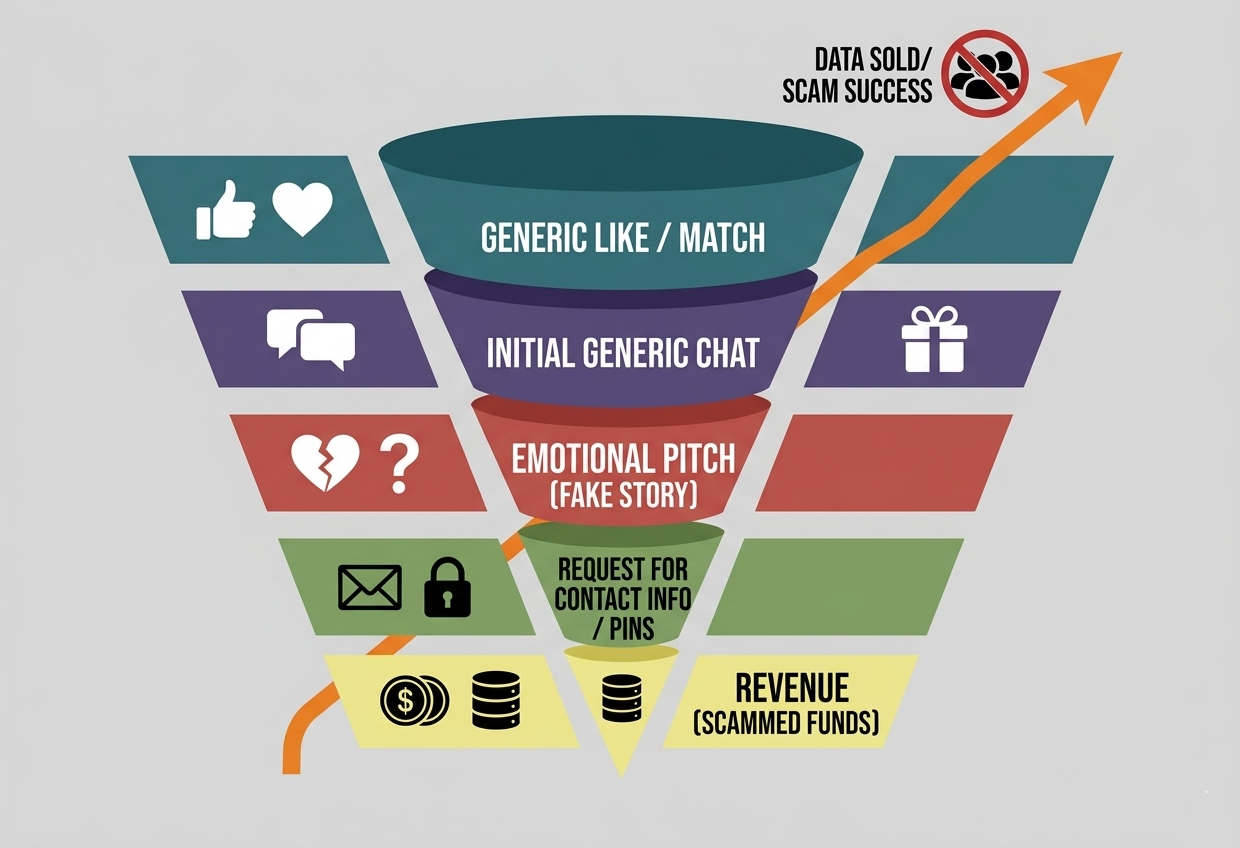
A lead-generation scam funnel in dating apps is a systematic approach where fraudsters collect personal, financial, or contact information from unsuspecting users, often through manipulative or romantic interactions. High-value dating platforms are targeted for premium leads, which can be sold, exploited, or used to bypass verification protocols. The funnel often begins with charm, attention, and false credibility before progressing to requests for sensitive data or off-platform engagement.
Luxy Interpretation
Luxy mitigates lead-generation scams by combining identity verification, income proof, and behavioral monitoring. Users are encouraged to report any requests for personal data, financial transfers, or external communication attempts. Luxy’s algorithms flag accounts that exhibit patterns consistent with funnel tactics—such as repeated messaging of similar content, off-platform redirection, or sudden interest shifts toward financial topics.
Origin / Trend
Lead-generation scams have grown alongside premium dating apps. Analysts in 2023–2025 documented organized operations leveraging romance to collect high-value leads. Investigative reports note that these scams often rely on psychological manipulation, rapid messaging, and cross-platform coordination.
Practical Prevention Steps
- Never share sensitive personal or financial information outside verified Luxy accounts.
- Monitor for repetitive or scripted messaging patterns.
- Use Luxy’s in-app verification and moderation tools.
- Report suspicious interactions immediately to prevent escalation.
References
- FTC — Romance scams & lead generation
- Wired — Data-driven social engineering in online dating
- Luxy Blog — User reporting & verification guidance
- BBC — Online dating fraud investigations