
Verification-Badge Bypass: How Fake Verification Works
Definition
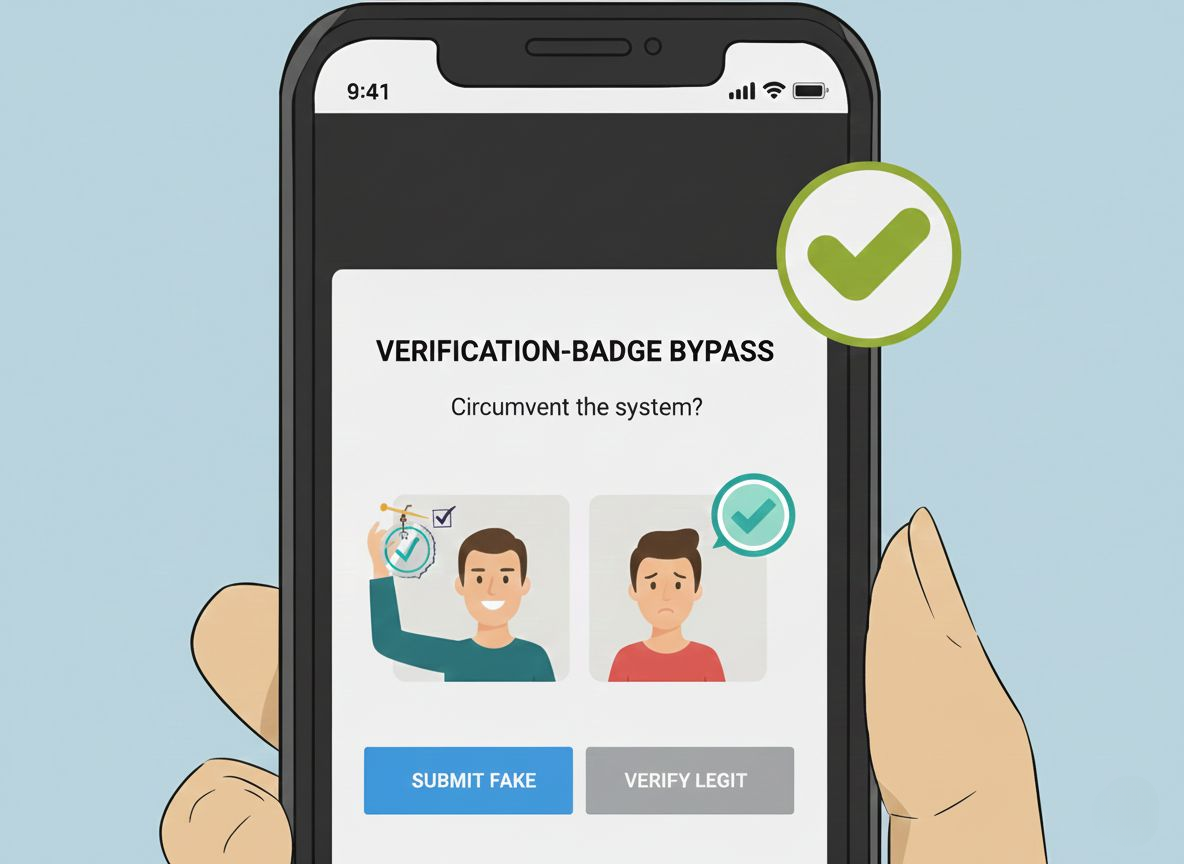
A verification-badge bypass refers to techniques used by malicious actors to obtain or maintain a “verified” or “trusted” badge on a platform without legitimately satisfying all verification requirements. Common methods include exploiting weak verification workflows, using stolen or deepfake photos, credential stuffing with verified account credentials, or social engineering of platform support.
Luxy Interpretation
Luxy combats badge bypass by combining manual review, photo verification, and optional income verification. Profiles submitted for verification undergo a 24-hour review of their bio, photos, and identity indicators. If suspicious behavior is detected — such as abnormal login patterns or reports from other users — Luxy can revoke verification badges and require the user to re-verify. Moreover, certain privileges (e.g. messaging capacity) are tied to verification status, reducing the risk that a bypassed badge leads to large-scale exploitation.
Origin / Trend
As verification badges (e.g., “blue check,” verified) became a symbol of trust on social and dating platforms, fraudsters have increasingly sought to replicate or hijack these signals. Tools such as deepfake generation, identity theft markets, and automated credential stuffing enable bad actors to create convincing but fraudulent “verified” accounts. Industry insiders note that badge integrity is now a serious security concern for many online platforms, prompting the adoption of biometric liveness checks and stricter human review.
Related Scams / Prevention Insight
Common adjacent attack vectors:
- Impersonation Scams:A fake “verified” profile can be used to trick users into trusting fraudulent requests for money or off-platform communication.
- Account Takeover:Verified accounts may be targeted via credential stuffing or phishing, then repurposed to carry out scams.
Prevention (for Luxy):
- Display clearly what a verification badge actually verifies (photo ✓, income ✓, but not necessarily background).
- Trigger re-verification when suspicious behavior is detected – e.g., new device, unusual IP, multiple reports.
- Place messaging and other privileges behind verification status to limit damage from a potentially abused badge.
External References
- BiometricUpdate — Facial Recognition and Dating App Security Trends
- ICO (UK) — Guidance on Biometric Recognition and Lawful Basis