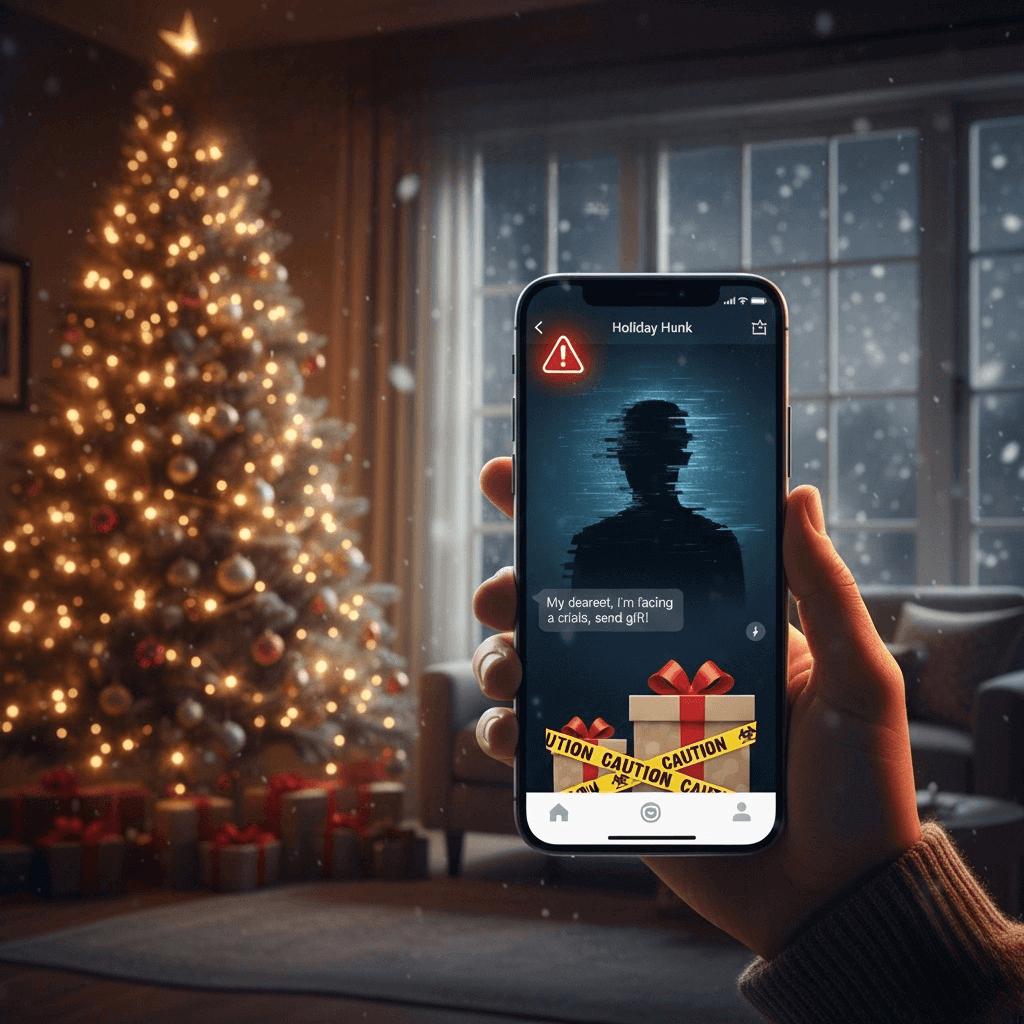
Holiday Romance Scams: Why Online Dating Scams Surge at Christmas
Your essential guide to staying safe during the holiday season
The Christmas and New Year season is supposed to be warm, joyful, and full of connection. Unfortunately, it is also peak season for online dating scams. Scammers know that people feel lonelier, more generous, and more emotionally open during this time—which makes December one of the most profitable months for romance-fraud groups.
This guide explains why these scams spike, the psychological tactics scammers use, the red flags to watch for, and how to protect yourself.
1. Why Romance Scams Increase During Christmas
1.1 Emotional Vulnerability
Many singles feel:
Loneliness during family gatherings
A desire for companionship
Stress or pressure to find a partner during the holidays
Scammers exploit these emotional states by appearing extra caring, attentive, or supportive.
1.2 “Holiday Pressure” Scenarios
Scammers know victims are more likely to respond to emotionally charged stories, such as:
Sudden emergencies
Dramatic travel plans
Holiday-related accidents
Family crises
These stories are designed to create urgency and trigger financial help.
1.3 Gift-Giving Culture
Christmas involves:
Exchanging presents
Purchasing gift cards
Donating to charity
Scammers take advantage of this generosity and ask for:
Gift cards
Holiday donations
“Travel money” to come visit
Money for sick relatives or children
1.4 More Online Activity
Dating apps see a significant spike in new users during December. More users = more targets.
1.5 Scammers Pretending to Travel
A common tactic during Christmas is promising to:
Fly to meet you
Spend Christmas together
Then they claim:
Passport problems
Customs fees
Visa issues
Lost luggage requiring payment
All designed to extract money.
2. Common Holiday Romance Scam Tactics
Table: Typical Tactics During Christmas Season
| Scam Tactic | How It Works | Red Flags |
|---|---|---|
| Gift Requests | Scammer asks for holiday gifts or gift cards. | “Can you buy me an Amazon card for Christmas?” |
| Fake Travel Plans | Pretends to fly to visit you for the holidays. | Claims customs or visa issues that require payment. |
| Emergency Stories | Sudden accident or sick relative before Christmas. | Requests money urgently. |
| Holiday Charity Scams | Pretends to raise money for a “cause.” | Asks for donations to unknown charities. |
| AI-Enhanced Profiles | AI-generated photos and scripts during peak season. | Perfect-looking photos, evasive behavior. |
3. Key Warning Signs of Holiday Romance Scams
3.1 They Avoid Real-Time Video
Excuses such as:
“My camera is broken.”
“I’m traveling.”
“The internet is bad.”
3.2 They Ask for Money or Gifts
Especially gift cards or crypto.
3.3 They Rush Emotional Intimacy
Love bombing is common during the holidays.
3.4 They Push to Move Off the Dating App
Scammers prefer WhatsApp, Telegram, or Instagram DMs.
3.5 Their Stories Become Increasingly Dramatic
Around Christmas you will often hear:
Travel delays
Stolen luggage
Emergency surgeries
Sick children
Lost passports
These are pressure tactics.
4. How to Protect Yourself During the Holidays
4.1 Keep communication on the dating platform
Dating apps have better monitoring and reporting systems.
4.2 Always request an in-app video verification
A live video call is the strongest defense.
4.3 Never send money or gifts to someone you haven’t met
Not even “just a gift card.”
4.4 Verify photos and stories
Reverse image search and check for inconsistencies.
4.5 If they claim to travel to meet you
Do NOT pay for:
Tickets
Customs fees
Visa extensions
Hotel deposits
These are classic scams.
4.6 Report suspicious behavior immediately
Use the platform’s built-in reporting tools.
5. FAQ: Holiday Romance Scams
Q1: Why do scammers prefer the Christmas season?
Because people feel lonelier, more generous, and more emotionally open, making them easier to manipulate.
Q2: Are gift-card requests always a scam?
Yes. No legitimate person asks a new match for a gift card.
Q3: What if someone wants to meet me for Christmas?
A real person will not ask you to pay for travel, visa, or customs fees.
Q4: Can scammers use AI to pretend to be someone else?
Yes. Many use AI-generated photos and chatbots for the early stages of the conversation.
Q5: What should I do if I realize I’m being scammed?
Stop contact, report the profile, and never send money or personal information.
6. Conclusion: Stay Alert During the Holidays
Online dating can be wonderful, but the holiday season attracts sophisticated scammers who exploit emotions, generosity, and loneliness. Stay cautious, verify identities, keep conversations on the dating platform, and never send money—no matter how convincing the story sounds.
If anything feels off, trust your instincts and report the profile.