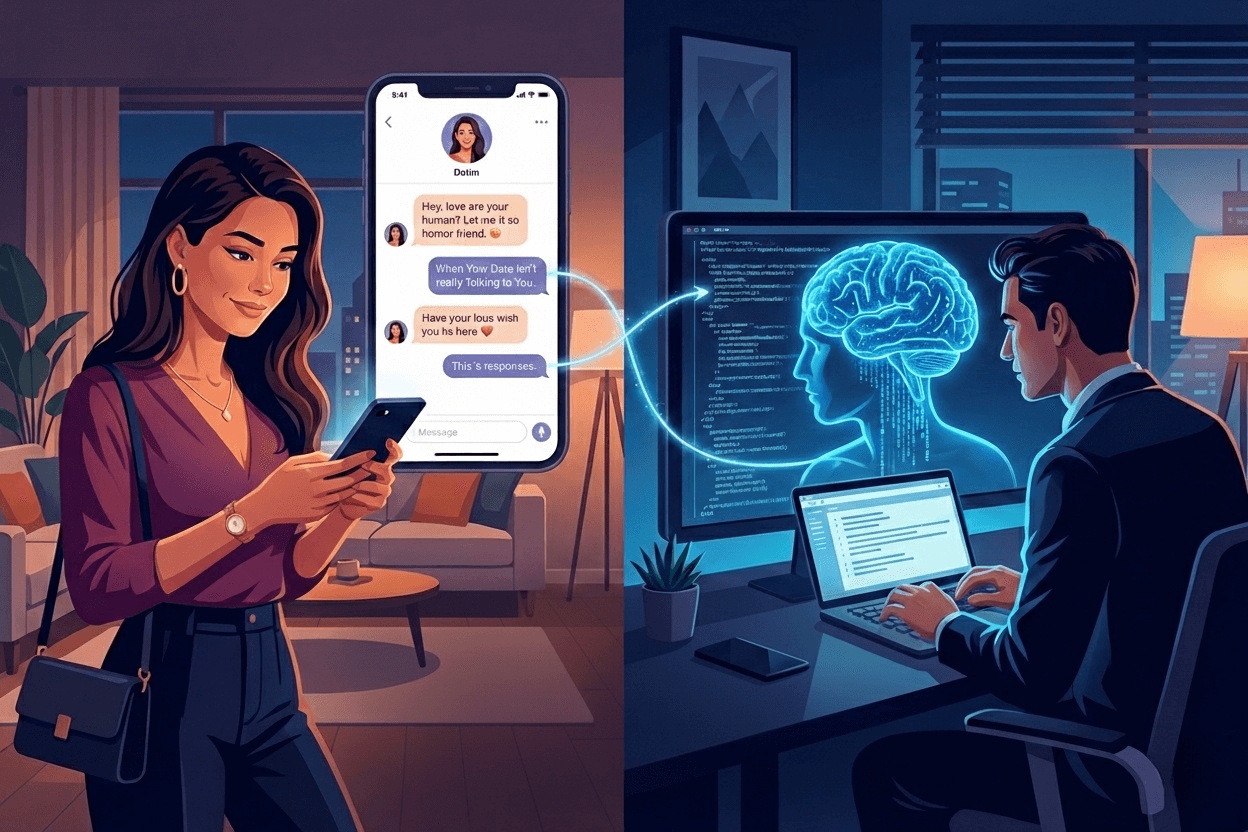
The AI-Ghostwriting Crisis: When Your Date Isn't Really Talking to You
In 2026, a new dating danger has emerged: AI-Ghostwriting, where people use AI agents to chat on their behalf, creating fake connections while remaining completely disconnected from the conversation.
What is AI-Ghostwriting?
AI-Ghostwriting means using AI tools like Rizz-AI to generate responses and maintain entire conversations without genuine human input. What seems like a heartfelt message might actually be algorithm-generated.
The Problem
- AI Agents handle conversations while people sleep, work, or ignore you
- Personality simulation mimics texting style perfectly
- Zero authentic connection - you might chat for weeks with someone who never read your messages
Unlike romance scams that steal money, AI-Ghostwriting steals your time and emotional investment.
2026 Trending Terms
#DeadboltDating - Both people using AI to chat with each other, creating a deadlocked conversation where no real human connection exists.
#AuthenticityVerification - The movement demanding proof of genuine human interaction in online dating.
How to Spot AI-Generated Conversations
Red Flags
1. Unnaturally Perfect
- Always grammatically flawless
- Zero typos or autocorrect mistakes
- No "oops" moments
- Feels like customer service
2. Suspicious Timing
- Instant replies at 3 AM
- Consistent response time regardless of complexity
- Never busy or distracted
3. Generic Depth
- Sounds thoughtful but says nothing personal
- Agrees with everything
- References your interests without unique insights
- "I totally understand where you're coming from"
4. Template Feel
- Opening lines sound scripted
- Compliments could apply to anyone
- Predictable conversation flow
5. Lacks Real-Time Context
- Ignores sudden topic changes
- Can't recall earlier conversation details
- Generic emotional responses
6. Too Perfect
- Every message perfectly charming
- Never awkward, never fumbles
- Too smooth to be human
Verify Authenticity
Simple Tests
The Spontaneity Test "Quick! First word that comes to mind: penguin" AI struggles with genuine spontaneity.
Voice Note Challenge Request a voice message. Most won't bother with voice synthesis.
Video Call Reality Check Suggest spontaneous video calls. Consistent avoidance = red flag.
The Typo Test Real humans make mistakes. No typos ever? Suspicious.
Deep Context Question Reference specific earlier details unexpectedly. AI loses thread or responds generically.
Protect Yourself
Set Boundaries
Be Direct
- "Are you using AI tools to chat?"
- "I prefer genuine connection over perfect messages"
Request Real-Time Proof
- Video calls within first week
- Voice notes for important topics
- Real-time scheduled chat sessions
What We Lose with AI-Ghostwriting
- Genuine vulnerability - Real people make mistakes
- True compatibility - Can't judge chemistry with algorithms
- Emotional investment - Why care if they don't care enough to type?
- Trust foundation - Starting with deception
Take Action
- Make video calls non-negotiable
- Value imperfect, genuine messages
- Join #AuthenticityVerification discussions
Remember: If the conversation feels too perfect, it probably isn't real.
FAQ
Q: What is AI-Ghostwriting? A: AI-Ghostwriting (AI代聊) is using AI tools like Rizz-AI to automatically generate responses without genuine human input. The AI mimics personality and texting style while the person remains disconnected.
Q: How can I tell if someone is using AI? A: Look for: (1) Perfect grammar with zero typos, (2) Instant responses at all hours, (3) Generic but "thoughtful" messages, (4) Can't handle spontaneous/absurd conversations, (5) Avoids voice/video calls, (6) Over-polished, scripted feel.
Q: What's #DeadboltDating? A: When both people use AI agents to chat with each other—two bots talking while both humans remain completely disconnected. No real connection exists.
Q: What should I do if I discover AI-Ghostwriting? A: (1) Confront them if safe, (2) End conversation immediately, (3) Report to platform, (4) Share experience in safety communities, (5) Don't feel embarrassed—it's common now.