
Soft Launch vs. Hard Launch: Social Signaling & Relationship Visibility in Dating
Definition
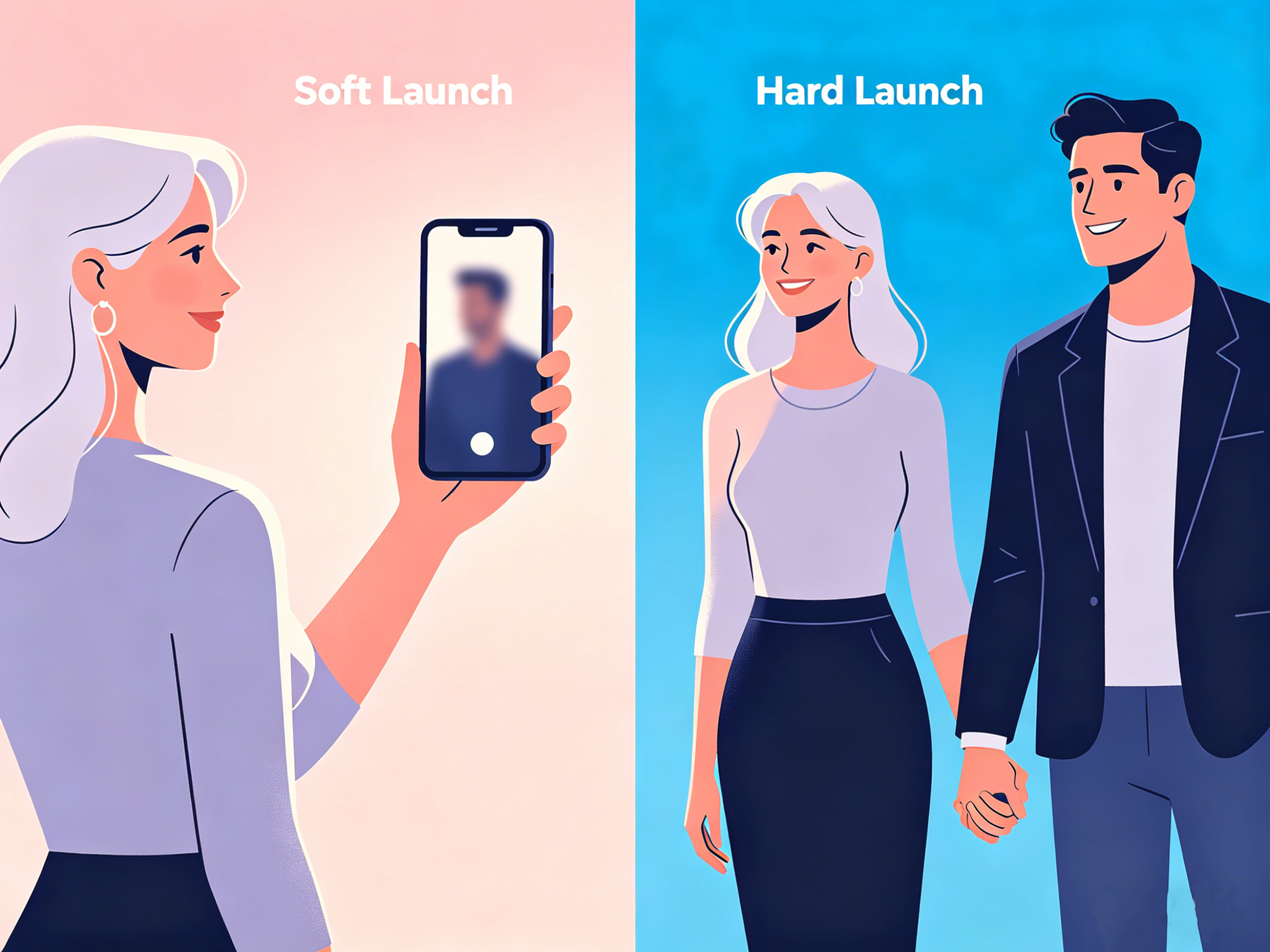
Soft launch and hard launch are modern dating terms that describe how individuals introduce a romantic partner on social media.
A soft launch refers to a subtle or indirect reveal of a relationship. This may include:
- partial photos (e.g., a hand, silhouette, or back view)
- ambiguous captions
- shared experiences without explicit identification
A hard launch, by contrast, is a clear and public confirmation of a relationship. It typically includes:
- full photos of both partners
- direct tagging or naming
- explicit captions confirming relationship status
The distinction reflects different levels of relationship visibility and commitment signaling, particularly in digital environments.
Luxy Interpretation
Within Luxy’s high-intent dating ecosystem, soft and hard launches function as social signaling mechanisms rather than formal relationship milestones.
A soft launch may indicate:
- early-stage exclusivity
- desire for privacy
- cautious progression
- ongoing evaluation of compatibility
A hard launch often signals:
- established relationship confidence
- public commitment
- integration into social identity
However, Luxy emphasizes that social visibility is not equivalent to relationship quality. High-value individuals may intentionally delay public exposure for reasons including privacy, reputation management, or professional considerations.
Users should evaluate:
- consistency between offline behavior and online representation
- whether visibility aligns with relationship progression
- potential mismatch between public image and private dynamics
Origin / Trend
The concept of soft and hard launching emerged from social media culture, particularly on platforms like Instagram and TikTok in the early 2020s.
Media outlets such as The New York Times and Insider have analyzed how relationship visibility has become part of digital identity construction.
This trend reflects broader behavioral shifts:
- relationships as part of personal branding
- increased audience awareness in dating decisions
- strategic control over personal disclosure
From a psychological perspective, visibility choices relate to impression management and social signaling, where individuals balance privacy with validation.
Related Behaviors & User Guidance
Related concepts
- Orbiting: passive engagement without direct acknowledgment
- Pocketing: hiding a partner from public view
- Breadcrumbing: maintaining attention without commitment
Key considerations
- early hard launches may reflect impulsivity
- prolonged soft launches may indicate hesitation or secrecy
- visibility decisions often reflect personal values rather than intent alone
Practical guidance
- Align visibility with relationship stage
Public disclosure should match real relationship progression. - Avoid equating social media with commitment
Offline behavior remains the strongest indicator of intent. - Discuss expectations openly
Misalignment in visibility preferences can create friction. - Respect privacy differences
Not all high-quality relationships require public exposure.
References
- The New York Times — How Social Media Shapes Modern Relationships
- Hindustan Times — Soft Launch vs Hard Launch Explained
- Pew Research Center — Social Media and Relationships
- Journal of Social and Personal Relationships — Impression Management in Romantic Contexts
```html