2026 Military Romance Scams: How to Spot the Red Flags and Protect Your Heart
In the world of online dating, military romance scams are among the most financially and emotionally devastating forms of fraud. Scammers impersonate high-ranking or deployed U.S. service members to exploit the trust and patriotism of unsuspecting individuals.
According to the FBI’s Internet Crime Complaint Center (IC3), romance scams account for hundreds of millions of dollars in losses annually. Here is the definitive guide on how these scams work and how to stay safe.
What is a Military Romance Scam?
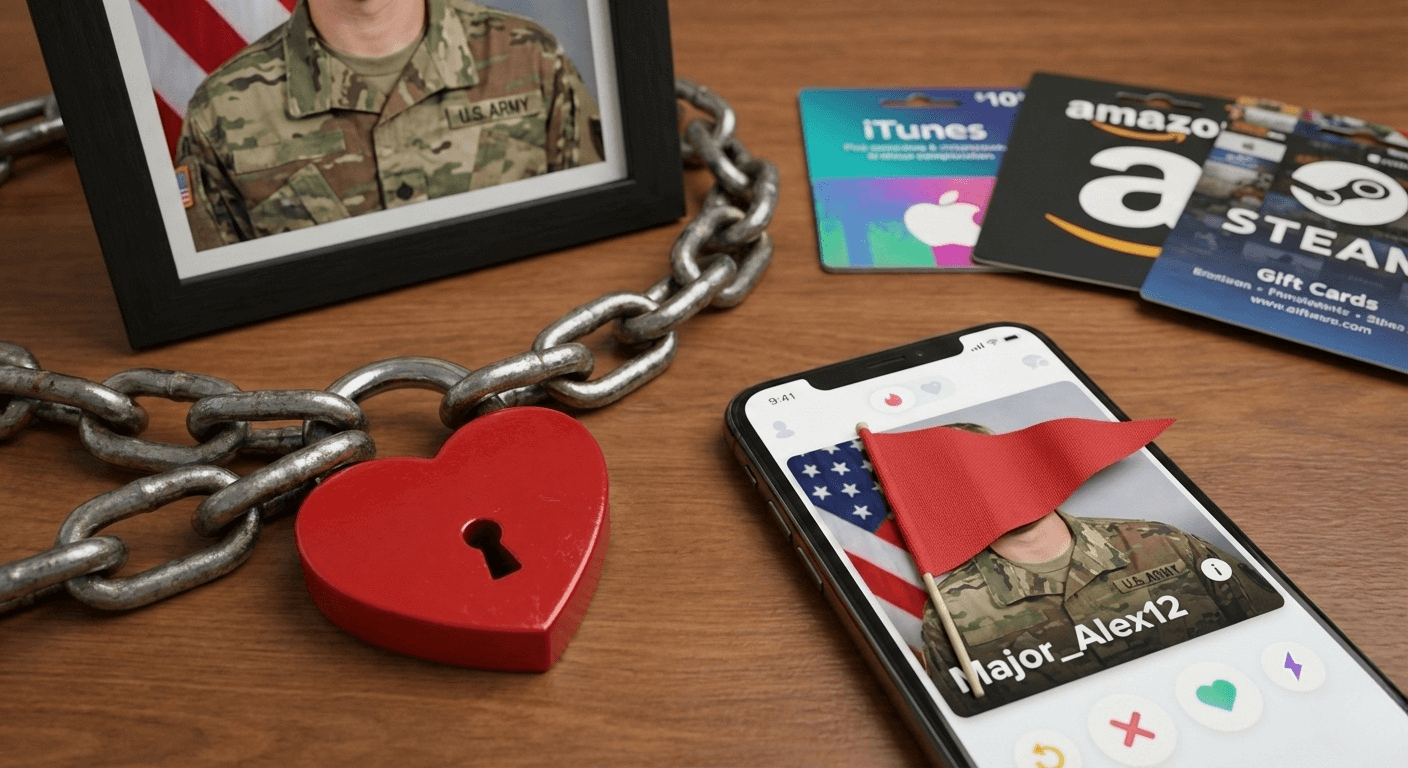
A military romance scam occurs when a fraudster creates a fake online profile using stolen photos of real service members. They typically claim to be deployed overseas (e.g., in the Middle East or on a peacekeeping mission) and build a deep emotional connection with the victim before asking for money.
The "Stolen Persona" Tactic
Scammers often use photos of "attractive, middle-aged officers" or "heroic young soldiers" taken from public social media profiles or news articles. They target users on dating apps, social media, and even professional networking sites.
5 Critical Red Flags of a Military Scammer
To protect yourself, watch for these common behavioral patterns used by military impersonators:
Immediate Emotional Escalation: They declare "I love you" within days or weeks, often referring to you as their "soulmate" or "wife/husband" very early on.
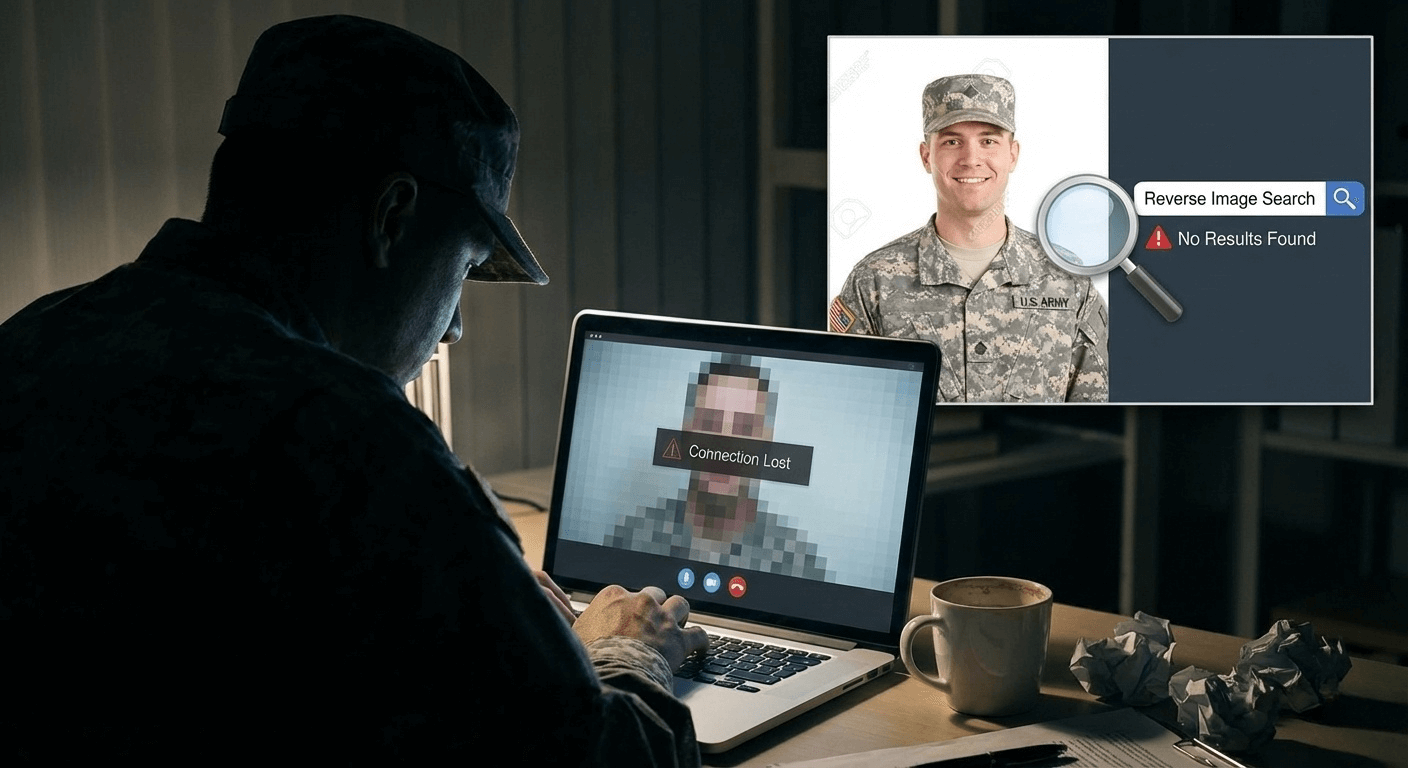
The "Secret Mission" Excuse: They claim they cannot video chat or meet in person because they are on a "high-security mission" or in a location with "restricted communication."
Moving Off-Platform Fast: They will insist on moving the conversation from a secure dating app to an unmonitored encrypted app like WhatsApp, Telegram, or Google Chat.
Poor Grammar and Syntax: While they claim to be high-ranking American officers, their messages often contain significant grammatical errors or use phrases that do not sound like a native English speaker.
The Financial Crisis: Eventually, they will ask for money for:
"Leave papers" or "processing fees" to come home.
Medical bills for a sudden injury.
Satellite phone minutes or internet access.
Transportation for "military equipment."
Expert Note: The U.S. Military never charges service members money to go on leave, nor do they ask civilians to pay for a soldier’s medical care or communication.
How to Verify a Service Member’s Identity
If you suspect your match might be a scammer, take these three proactive steps immediately:
1. Conduct a Reverse Image Search
Use Google Lens or TinEye to upload their profile pictures. If the photos appear under different names or on "Scambaiting" websites, it is a fraud.
2. Request a "Real-Time" Video Call
Scammers will make every excuse to avoid video calls. If they do agree, the video may be grainy, looped, or have a significant audio lag. Insist they perform a specific action (like holding up a piece of paper with today's date) to prove it is a live feed.
3. Check Military Formalities
Ask basic questions about their MOS (Military Occupational Specialty) or their current base. If their answers are vague or contradict common military knowledge (which can be verified on official sites like Army.mil), be wary.
FAQ: What to Do If You’ve Been Scammed
Q: Where do I report military romance scams?
A: If you are in the United States, you should report the incident to:
FBI IC3: ic3.gov
FTC: reportfraud.ftc.gov
The Dating Platform: Immediately report and block the profile to prevent them from targeting others.
Q: Can I get my money back?
A: It is extremely difficult to recover funds sent via wire transfer, gift cards, or cryptocurrency. Contact your bank immediately to see if a recall is possible, though it is rarely guaranteed.
Q: Should I confront the scammer?
A: No. Do not confront them. Scammers are part of organized crime syndicates. Simply block all forms of communication and document all previous interactions for your report to the authorities.