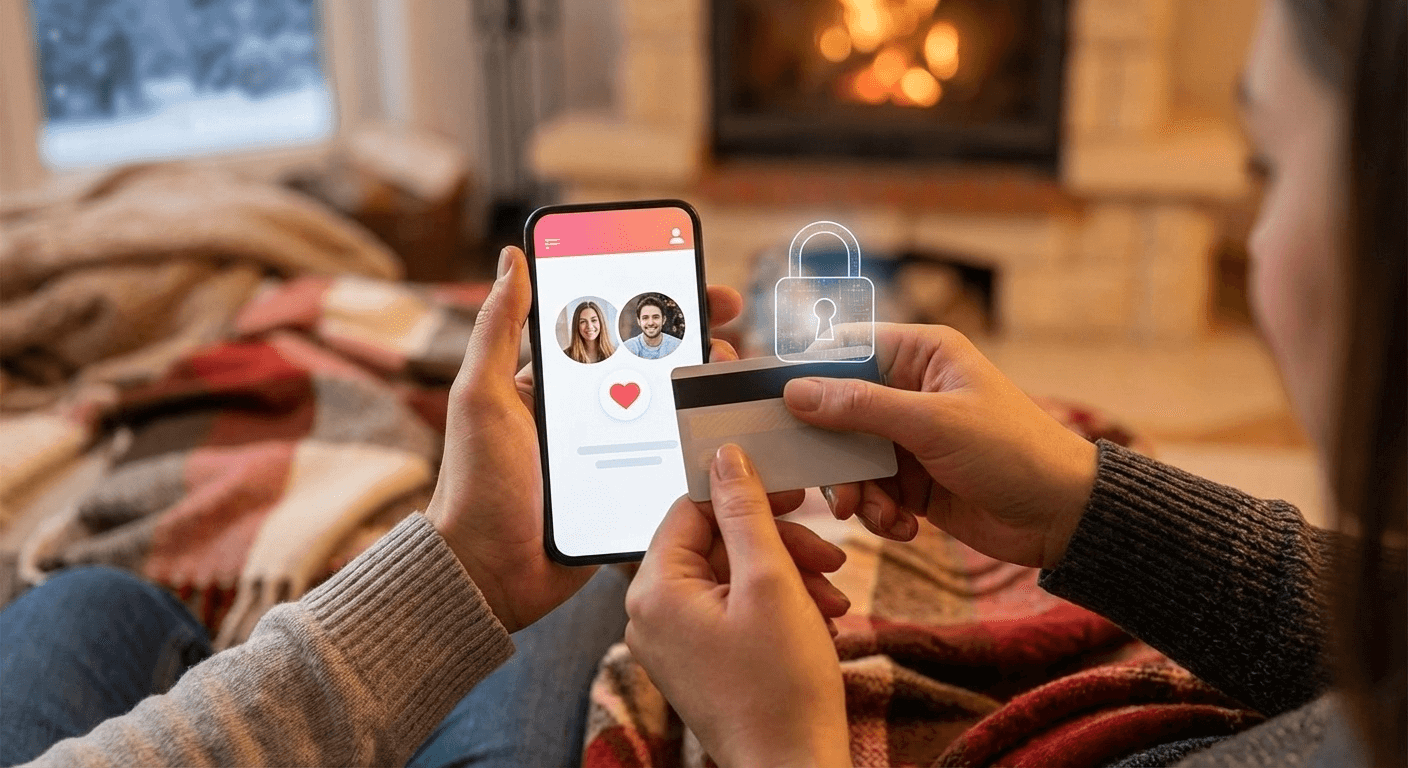
The Psychology of "Cuffing Season" Fraud: Protect Your Assets This 2026 Winter
As the temperatures drop and holiday lights go up, the phenomenon known as "Cuffing Season" begins. It’s that time of year when the biological and societal desire for companionship intensifies. Unfortunately, sophisticated scammers use this seasonal vulnerability to execute emotional and financial frauds.
Understanding the psychology behind these scams is the first step toward staying safe. Here is a breakdown of why we become vulnerable and the practical steps you can take to protect yourself.
🧠 The Psychology: Why It Works
During the winter months, several factors converge to lower our natural defenses:
Emotional Urgency: Holiday traditions often emphasize "couples," creating psychological pressure to find someone quickly.
The Dopamine Loop: Scammers use "Love Bombing"—excessive attention and affection—to create a chemical dependency. This makes it harder to think critically when red flags appear.
The "Fresh Start" Bias: As the New Year approaches, we are more open to "exclusive" investment tips or lifestyle changes suggested by a new partner.
🛡️ Practical Tips for Safe Dating
To ensure your search for companionship doesn't lead to a compromise of your security, follow these protective habits:
Maintain a "Dating Speed Limit": Scammers try to accelerate the relationship to bypass your logic. If someone is declaring love within days, consciously slow down.
Keep it On-Platform: Stay on the dating app’s messaging system. Scammers move to WhatsApp or Telegram to avoid the safety filters and moderation of the dating platform.
The "Action-Based" Verification: In 2026, photos and basic video calls can be faked. During a video call, ask them to do something unplanned, like "Wave with three fingers" or "Hold up a piece of paper with today's date." AI rendering often glitches during these movements.
Separate Romance from Finance: This is the golden rule. No matter how much you trust them, never mix your heart with your bank account. If they mention a "guaranteed" crypto investment or a "frozen account," end the interaction.
❓ Frequently Asked Questions (FAQ)
Q: Why is "Cuffing Season" specifically targeted by scammers? A: Scammers rely on "emotional high-jacking." During the holidays, people are statistically more likely to feel lonely or pressured to have a partner for family events. This emotional state makes victims more willing to overlook inconsistencies in a person's story in favor of the "dream" of a relationship.
Q: If we’ve had a video call, doesn’t that prove they are real? A: Not anymore. In 2026, Deepfake technology allows scammers to overlay a different face and voice onto their own in real-time. This is why "Action-Based Verification" (asking them to perform specific, odd movements) is crucial—it breaks the AI's ability to map the face correctly.
Q: Is it ever okay to move to WhatsApp or Telegram? A: Only after you have met in person or have 100% verified their identity through other reputable channels (like a professional LinkedIn profile or a mutual friend). Moving off-app is the #1 signal that a scammer is trying to bypass security protocols.
Q: I’ve already sent money/crypto. Can I get it back? A: Cryptocurrency transactions are technically irreversible, but there is hope. Act immediately:
Contact your bank or the crypto exchange where the transfer originated to see if the funds can be frozen.
Report the incident to the FBI's IC3 (Internet Crime Complaint Center) or your local equivalent.
Warning: Beware of "Recovery Scammers" who message you claiming they can "hack" the scammer to get your money back for a fee. These are secondary scams.
Q: Where should I report a suspected scammer? A: Always report the profile within the dating app first to protect other users. For legal action, file a report with:
USA: ReportFraud.ftc.gov or IC3.gov
Australia: Scamwatch.gov.au
Final Thought
Cuffing Season should be a time for genuine connection, not financial stress. By keeping your logical brain engaged and following these practical boundaries, you can navigate the dating world with confidence.