
Vibe Check: Meaning, Social Perception & Compatibility Filtering
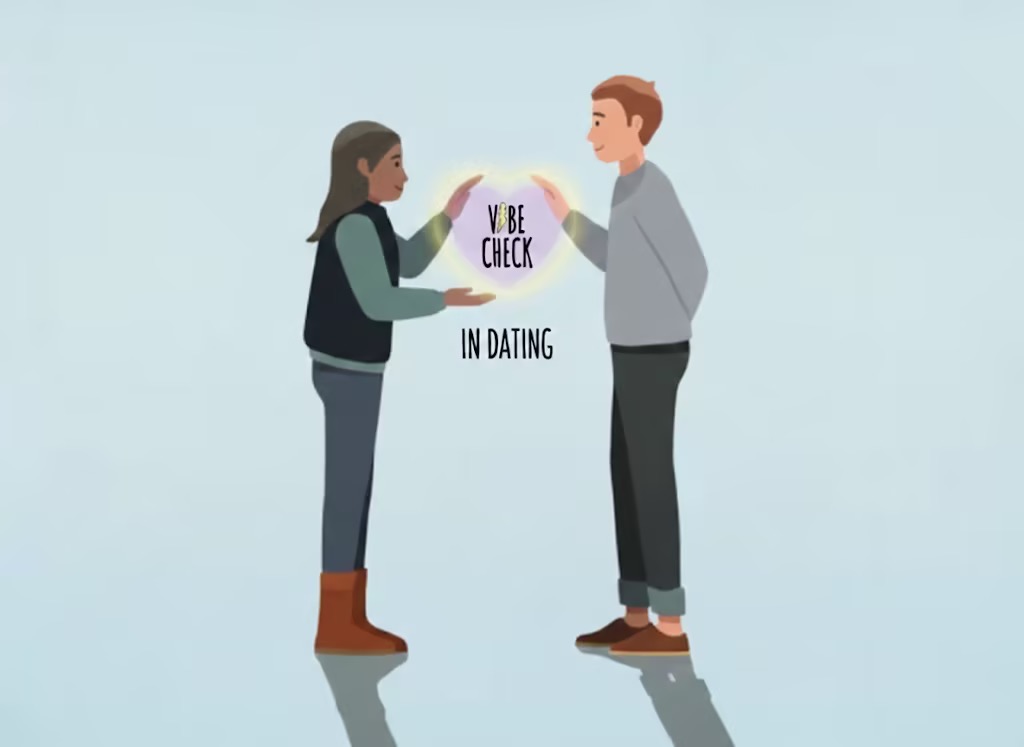
Definition
Vibe check describes the rapid intuitive assessment of another person’s energy, attitude, authenticity, or social alignment during interaction. It is an informal but widely adopted concept capturing pre-rational judgments of comfort, congruence, and interpersonal resonance.
In dating contexts, a vibe check often occurs within seconds of interaction — via messaging tone, voice, video calls, or first meetings.
Cognitive Basis
Human social cognition heavily relies on thin-slice judgments — fast evaluations derived from minimal information. Research shows individuals quickly infer trustworthiness, confidence, warmth, and social compatibility using subtle behavioral cues.
A vibe check therefore synthesizes:
- Emotional intuition
- Pattern recognition
- Social calibration
- Contextual expectations
Digital Dating Context
In online dating environments, vibe checks adapt to digital signals:
- Message tone and rhythm
- Humor alignment
- Conversational confidence
- Self-presentation coherence
- Micro-behavior consistency
Because digital interaction lacks full sensory input, users overweight linguistic and timing cues.
Luxy Interpretation
Among high-intent daters, vibe checks function as efficiency filters rather than superficial judgments. Luxy user behavior frequently shows that strong early vibe alignment predicts longer conversation survival and higher meeting likelihood.
Importantly, vibe checks do not replace compatibility evaluation; they regulate attention allocation. Negative vibe outcomes often terminate interactions before deeper assessment occurs.
False Positives & Bias Factors
Vibe checks are vulnerable to distortion via:
- Projection bias
- Mood state effects
- Overinterpretation of text tone
- Cultural communication differences
Structured observation across multiple interactions improves accuracy.
Practical Insight
Instead of treating vibe checks as definitive truth, treat them as probabilistic signals requiring validation through consistency and behavioral congruence.